Delivery Driver Mistakes
Introduction
Delivery driving may seem straightforward on the surface, but experienced drivers know that success depends on much more than simply following a sat nav from one address to another.
Whether you’re a self-employed courier, multi-drop delivery driver, parcel carrier, field service engineer or logistics professional, small mistakes can quickly add up to lost time, increased fuel costs, missed deliveries and frustrated customers.
Many delivery drivers focus on working harder when the real solution is often working smarter.
The most successful drivers are not necessarily the fastest drivers. They are the drivers who plan efficiently, minimise wasted mileage, manage their time effectively and use technology to their advantage.
If you’re new to route planning, start by reading our Ultimate Route Planning Guide for Beginners:
https://routeflowapphq.com/the-ultimate-route-planning-guide-for-beginners/
In this guide, we’ll explore ten of the most common mistakes delivery drivers make and explain practical ways to avoid them.
1. Failing to Plan Routes Properly
One of the biggest mistakes delivery drivers make is starting a route without proper planning.
Many drivers simply enter stops into a navigation app one at a time and begin driving.
While this approach may work for a handful of deliveries, it quickly becomes inefficient when managing larger routes.
Poor route planning often leads to:
- Unnecessary mileage
- Backtracking
- Increased fuel costs
- Longer working hours
- Driver frustration
How to Avoid It
Before leaving the depot or warehouse:
- Review all stops
- Check delivery priorities
- Identify time-sensitive deliveries
- Optimise the route sequence
Using modern route optimisation software can reduce mileage significantly and help drivers complete more deliveries each day.
If you’re interested in improving route efficiency, explore RouteFlow’s route optimisation features:
https://routeflowapphq.com/features/
2. Ignoring Delivery Time Windows
Many deliveries have specific time requirements.
Examples include:
- Before 10am deliveries
- Before noon deliveries
- Appointment-based deliveries
- Business opening hours
Drivers who fail to account for these restrictions can find themselves rushing later in the day or missing delivery commitments entirely.
Late deliveries can result in:
- Customer complaints
- Failed delivery attempts
- Poor service ratings
- Additional redelivery costs
How to Avoid It
Review all time-sensitive deliveries before starting.
Prioritise deadlines during route planning and ensure your route optimisation software considers delivery windows when building the route.
3. Relying Solely on Memory
Some experienced drivers become overconfident and attempt to manage routes from memory.
While local knowledge is valuable, relying entirely on memory can create problems.
Road networks constantly change due to:
- Roadworks
- Closures
- Traffic incidents
- New developments
Even experienced drivers can overlook better route options.
How to Avoid It
Combine local knowledge with modern navigation technology.
Use route planning software and live navigation tools to make informed decisions while still benefiting from your own experience.
4. Failing to Check Addresses Before Departure
Incorrect addresses are one of the most common causes of failed deliveries.
Common problems include:
- Missing house numbers
- Incorrect postcodes
- Incomplete street names
- Customer data entry errors
Discovering address issues during a route wastes valuable time.
How to Avoid It
Verify addresses before leaving.
Check:
- Postcodes
- House numbers
- Street names
- Delivery notes
Many professional delivery apps can identify problematic addresses before a route begins.
5. Underestimating Traffic Conditions
Traffic can dramatically affect delivery performance.
Drivers often underestimate how much congestion impacts:
- ETAs
- Fuel consumption
- Delivery windows
- Route completion times
A route that appears efficient on paper may become inefficient during rush hour.
How to Avoid It
Monitor traffic conditions throughout the day.
According to the UK Government’s traffic statistics, congestion remains one of the largest contributors to increased journey times and transport inefficiencies:
https://www.gov.uk/government/statistics/road-traffic-estimates-in-great-britain
Considering local traffic patterns can help drivers make better routing decisions and improve ETA accuracy.
6. Poor Vehicle Organisation
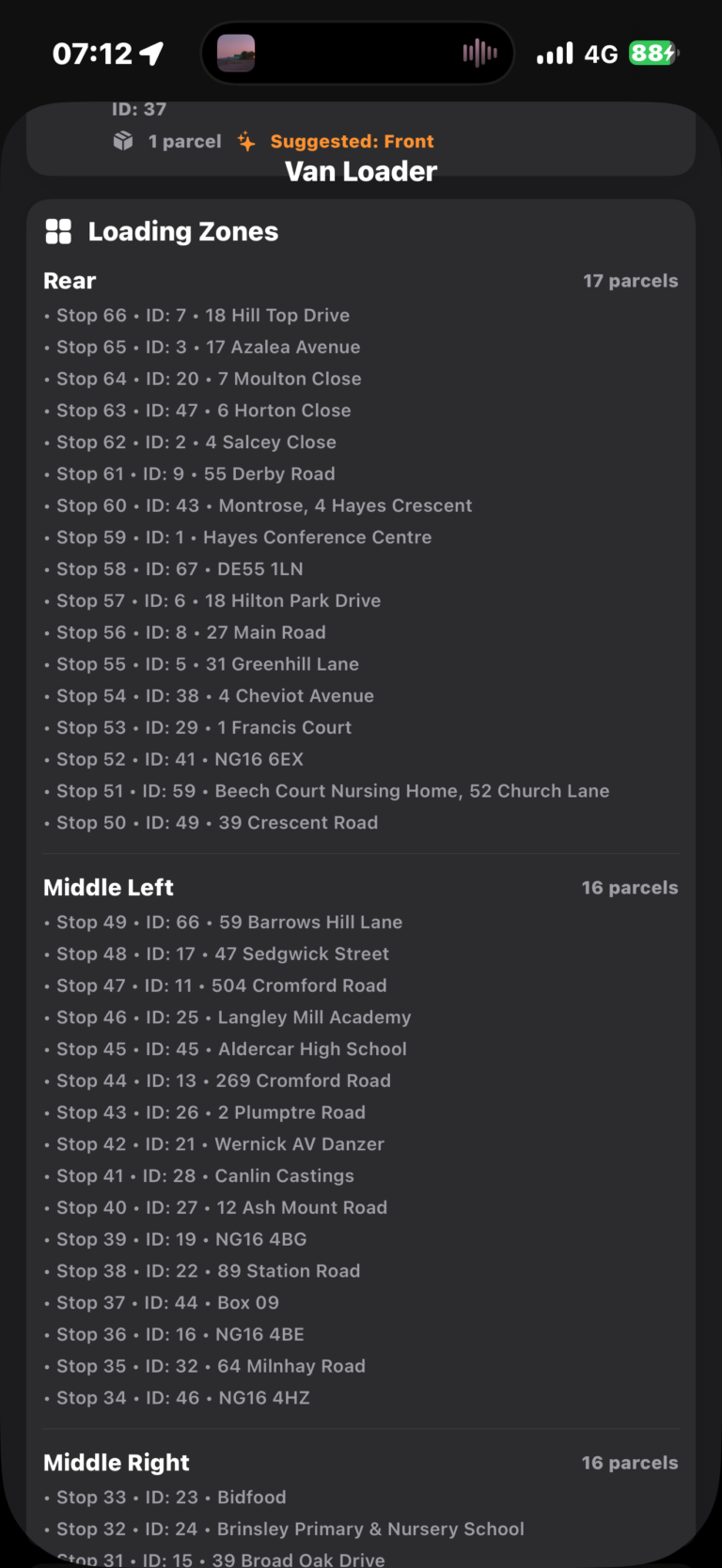
Many drivers lose significant time searching for parcels.
When hundreds of parcels are loaded randomly, every stop becomes slower.
Small delays accumulate throughout the day.
Just 30 extra seconds per stop can add nearly an hour to a route containing 100 deliveries.
How to Avoid It
Load parcels in delivery order.
Organise the vehicle by:
- Route sequence
- Delivery zone
- Parcel size
- Delivery priority
A well-organised vehicle improves efficiency and reduces driver stress.
7. Skipping Proof of Delivery
Failing to capture proper proof of delivery can create serious issues later.
Without proof, disputes become difficult to resolve.
Customers may claim:
- Deliveries never arrived
- Parcels were left incorrectly
- Items were damaged
How to Avoid It
Always capture proof of delivery.
Examples include:
- Customer signatures
- Delivery photos
- GPS location records
- Delivery notes
Many modern delivery apps now include integrated Proof of Delivery systems that automatically record delivery evidence.
Learn more about RouteFlow’s delivery management features:
https://routeflowapphq.com/features/
8. Poor Time Management
Many delivery drivers focus entirely on driving while overlooking overall time management.
Common issues include:
- Extended breaks
- Unnecessary stops
- Inefficient loading
- Delayed departures
Even small delays throughout the day can significantly impact route completion times.
How to Avoid It
Track:
- Route start times
- Delivery rates
- Average stop duration
- Daily performance
Understanding where time is spent allows drivers to improve productivity without rushing.
9. Failing to Monitor Performance
Many drivers never analyse their completed routes.
As a result, they repeat the same mistakes every day.
Without performance data, it’s difficult to identify opportunities for improvement.
How to Avoid It
Review metrics such as:
- Stops completed
- Miles driven
- Fuel consumption
- Delivery success rates
- Route completion times
Performance analysis helps drivers continually improve efficiency.
10. Not Using Modern Route Optimisation Technology
Perhaps the biggest mistake is attempting to manage modern delivery workloads using outdated methods.
Today’s delivery routes often contain:
- 50+ stops
- Tight delivery windows
- High customer expectations
- Complex logistics requirements
Manual route planning simply cannot compete with modern optimisation technology.
How to Avoid It
Use professional route planning software that offers:
- Multi-stop optimisation
- Driver navigation
- Live ETAs
- Proof of Delivery
- Route analytics
- Route history
Technology allows drivers to work smarter rather than harder.
Why Drivers Choose RouteFlow
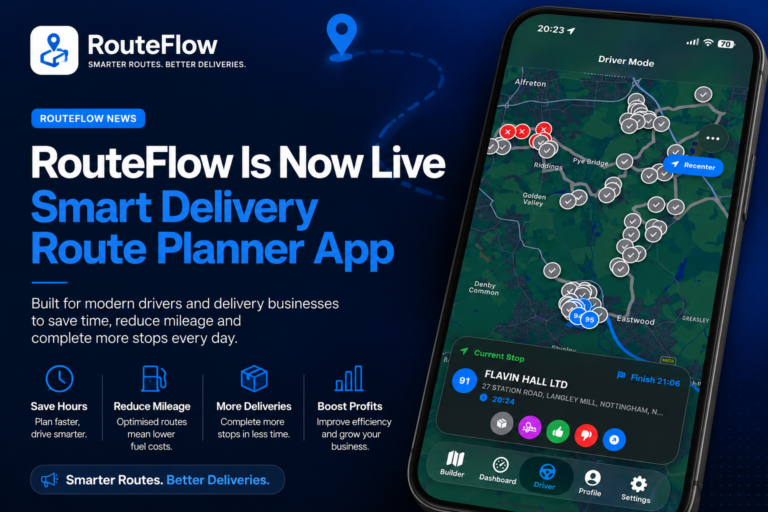
RouteFlow combines route optimisation, Driver Mode, Proof of Delivery and route analytics into a single platform designed specifically for delivery drivers and logistics businesses.
Key features include:
- Multi-stop route optimisation
- Driver navigation
- Live ETA calculations
- Proof of Delivery
- Route history
- Performance analytics
- PDF reporting
Start your free trial today:
https://routeflowapphq.com/7-day-free-trial/
Final Thoughts
Every delivery driver makes mistakes from time to time.
The difference between average drivers and top-performing drivers is their ability to identify inefficiencies and improve continuously.
By avoiding the ten mistakes outlined in this guide, drivers can save time, reduce mileage, improve customer satisfaction and increase profitability.
As delivery volumes continue to grow and customer expectations continue to rise, efficient route planning and modern delivery technology are becoming essential tools for success.
The best drivers don’t simply drive more. They drive smarter.