Discover how route optimisation can reduce fuel costs, lower mileage and improve delivery efficiency. Learn how much delivery drivers can realistically save.
Introduction
Fuel is one of the biggest expenses facing delivery drivers, couriers and logistics businesses today.
Whether you’re a self-employed courier completing 30 stops per day or a fleet operator managing multiple vehicles, fuel costs can have a significant impact on profitability.
Many drivers accept rising fuel prices as something beyond their control. However, while fuel prices fluctuate, route efficiency is something that can be improved.
One of the most effective ways to reduce fuel consumption is through route optimisation.
By reducing unnecessary mileage, avoiding backtracking and creating more efficient delivery routes, route optimisation can help drivers save fuel, complete more stops and spend less time on the road.
If you’re new to route planning, start with our Ultimate Route Planning Guide for Beginners:
In this guide, we’ll explore how route optimisation works, how much fuel it can realistically save and why modern route planning software is becoming essential for professional delivery operations.
⸻
Why Fuel Costs Matter
Fuel is often the second largest operating cost after vehicle ownership.
For many delivery drivers, fuel can account for thousands of pounds in annual expenses.
Consider a driver who:
- Completes 100 miles per day
- Works 5 days per week
- Works 50 weeks per year
That’s:
- 25,000 miles annually
Even small improvements in route efficiency can create substantial savings.
Reducing daily mileage by just 10 miles saves:
- 50 miles per week
- 2,500 miles per year
Those savings quickly add up.
⸻
What Is Route Optimisation?
Route optimisation is the process of calculating the most efficient order to visit multiple stops.
Rather than manually arranging deliveries or following the order they were received, optimisation software analyses:
- Stop locations
- Road networks
- Driving distances
- Traffic patterns
- Delivery deadlines
- Time windows
The result is a route that minimises wasted travel and maximises efficiency.
Learn more about RouteFlow’s route optimisation tools:
https://routeflowapphq.com/features
⸻
Where Fuel Is Wasted
Many drivers are surprised by how much fuel is wasted through inefficient routing.
Common causes include:
Backtracking
Driving back through areas already visited.
Poor Stop Sequencing
Visiting nearby deliveries at different times throughout the day.
Unnecessary Detours
Taking longer routes due to poor planning.
Excessive Idling
Spending additional time in traffic or searching for addresses.
Failed Deliveries
Returning to locations because deliveries could not be completed.
These issues increase both fuel consumption and operating costs.
⸻
Real-World Fuel Savings From Route Optimisation
The amount of fuel saved varies depending on route quality and delivery density.
Typical improvements include:
| Route Quality Before Optimisation | Potential Mileage Reduction |
| Poorly Planned Routes | 20–30% |
| Average Routes | 10–20% |
| Already Efficient Routes | 5–10% |
For many drivers, savings of 10–20% are realistic.
⸻
Example Scenario
Imagine a courier completing:
- 120 miles per day
- Fuel economy of 40 MPG
- Fuel cost of £1.40 per litre
Annual mileage:
30,000 miles
If route optimisation reduces mileage by just 15%, annual mileage becomes:
25,500 miles
That’s:
4,500 fewer miles every year.
Alongside fuel savings, this also reduces:
- Vehicle wear
- Maintenance costs
- Tyre replacement costs
- Driver fatigue
⸻
Fuel Savings Are Only Part of the Benefit
Many drivers focus solely on fuel.
However, route optimisation also saves time.
Saving:
- 30 minutes per day
- 5 days per week
- 50 weeks per year
results in:
125 hours saved annually.
That’s more than three full working weeks.
⸻
How Route Optimisation Reduces Mileage
Modern route optimisation software uses advanced algorithms to create efficient delivery sequences.
Instead of visiting stops randomly, deliveries are organised into logical clusters.
Benefits include:
- Less driving
- Fewer repeated roads
- Reduced congestion exposure
- Faster completion times
This often produces routes that would be difficult to create manually.
⸻
Common Mistakes That Increase Fuel Costs
Many delivery drivers unknowingly waste fuel every day.
Examples include:
Starting Without Planning
Drivers who begin routes without optimisation often create unnecessary mileage.
Ignoring Delivery Priorities
Poor scheduling can lead to repeated journeys across the same area.
Using Standard Navigation Apps
Traditional navigation apps are designed for point-to-point travel rather than multi-stop delivery routes.
Poor Vehicle Organisation
Searching for parcels increases stop duration and overall route time.
We explore more common delivery mistakes in our guide:
⸻
Fuel Savings for Fleet Operators
Fleet managers often see even greater savings.
When multiple vehicles operate inefficiently, small route improvements multiply across the entire fleet.
For example:
10 vehicles saving:
- 10 miles per day
- 5 days per week
equals:
500 miles saved weekly.
Over a year, that becomes tens of thousands of miles.
⸻
The Impact on Vehicle Wear
Reducing mileage doesn’t only save fuel.
It also reduces wear on:
- Tyres
- Brakes
- Suspension
- Engines
- Clutches
This can significantly reduce annual maintenance costs.
Many businesses overlook these additional savings when calculating the value of route optimisation.
⸻
Traffic and Fuel Consumption
Traffic congestion remains a major contributor to fuel waste.
According to UK Government road traffic statistics, congestion continues to affect journey efficiency across the country:
https://www.gov.uk/government/statistics/road-traffic-estimates-in-great-britain
Spending less time in traffic generally means:
- Lower fuel consumption
- Reduced emissions
- Faster deliveries
Efficient route planning helps minimise unnecessary exposure to congestion.
⸻
Environmental Benefits
Fuel savings also reduce environmental impact.
Benefits include:
- Lower carbon emissions
- Reduced fuel consumption
- More sustainable delivery operations
As environmental expectations increase, efficient routing is becoming increasingly important for businesses and customers alike.
⸻
Why Drivers Are Switching to RouteFlow
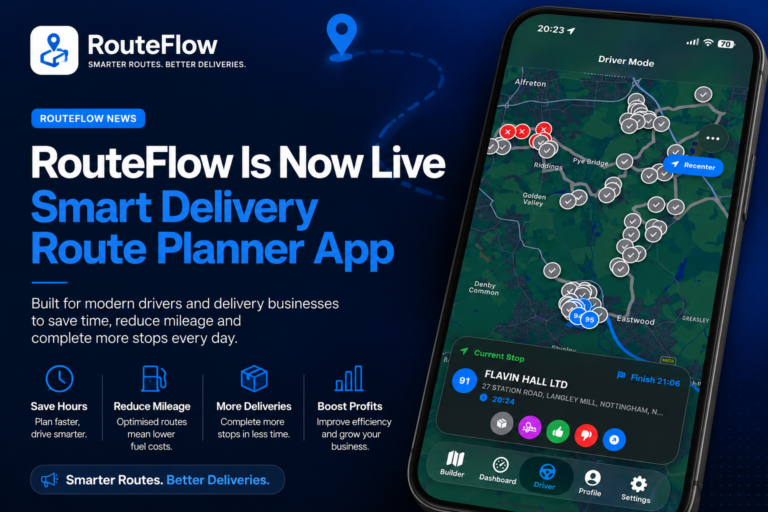
RouteFlow was built specifically for delivery drivers, couriers and logistics businesses.
Features include:
- Multi-stop route optimisation
- Driver Mode navigation
- Live ETAs
- Route analytics
- Route history
- Proof of Delivery
- Performance reporting
Rather than using multiple apps, RouteFlow provides a complete delivery workflow in one platform.
⸻
Frequently Asked Questions
Can route optimisation really save fuel?
Yes.
Most drivers can reduce mileage by between 10% and 20%, depending on route quality and delivery density.
How much mileage can route optimisation save?
Savings vary, but many drivers reduce annual mileage by thousands of miles.
Does route optimisation help small routes?
Yes.
Even routes containing 10–20 stops can benefit from more efficient stop sequencing.
Is route optimisation only for large fleets?
No.
Self-employed couriers and single-vehicle operators often benefit significantly from route optimisation.
Does route optimisation reduce vehicle wear?
Yes.
Less mileage generally means lower maintenance and repair costs.
⸻
Final Thoughts
Fuel costs remain one of the largest expenses facing delivery drivers and logistics businesses.
While drivers cannot control fuel prices, they can control route efficiency.
Route optimisation reduces unnecessary mileage, saves fuel, improves productivity and helps drivers complete more work in less time.
For many delivery operations, even a small reduction in mileage can result in significant annual savings.
The most successful delivery drivers aren’t simply driving harder—they’re driving smarter.
⸻
Ready to Reduce Fuel Costs?
RouteFlow helps delivery drivers, couriers and logistics businesses reduce mileage, improve productivity and optimise every route.
Explore RouteFlow Features:
https://routeflowapphq.com/features
Or start your free trial today:
https://routeflowapphq.com/7-day-free-trial
Discover how smarter route planning can help you save fuel, save time and improve delivery performance.